Acheiropoieton – The “Image Not Made by Human Hands” and Its Connection to the Shroud of Turin
Why do images of Christ look so similar across centuries?
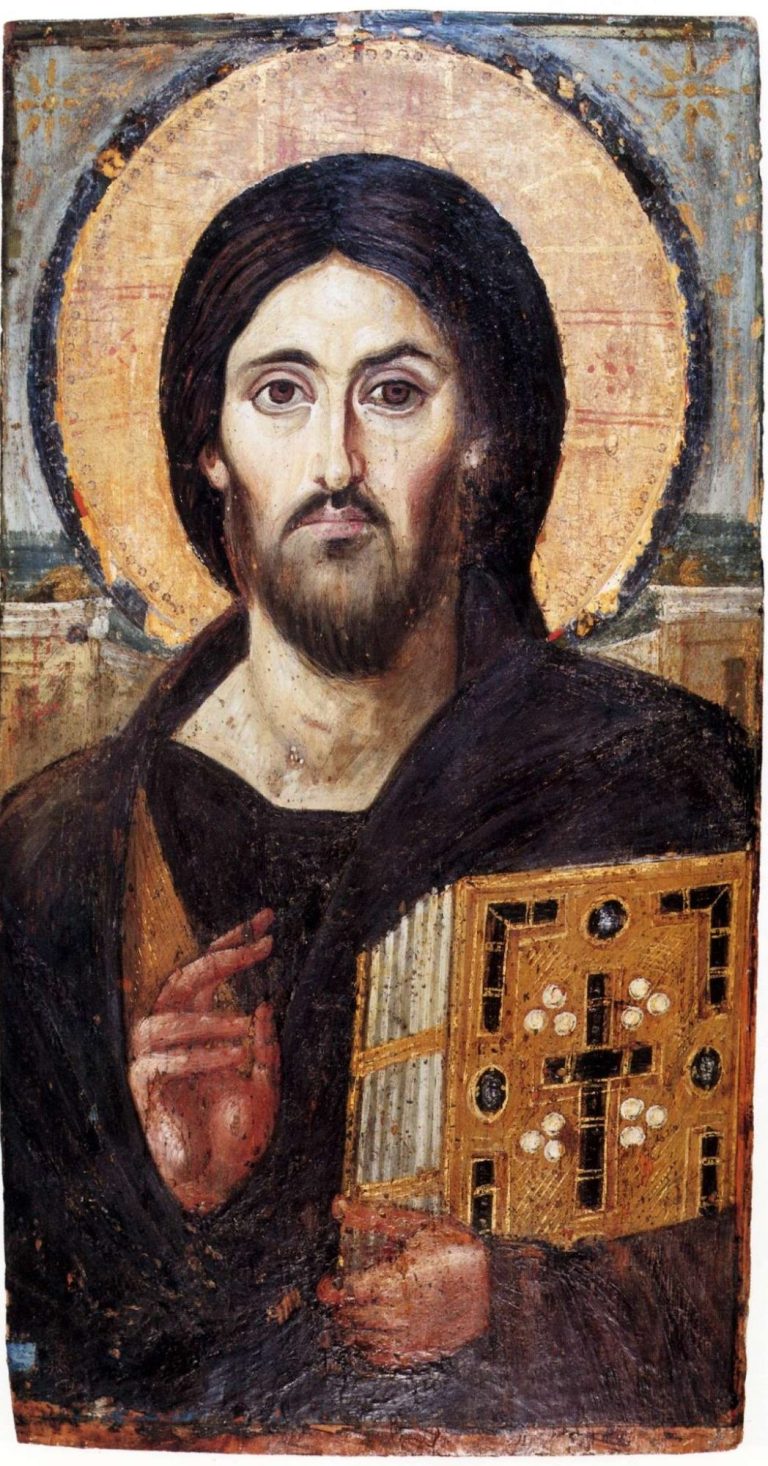
Christ Pantocrator (Monastery of Saint Catherine, Sinai, 6th century)
Depictions of Christ have followed a remarkably consistent pattern for centuries:
- long hair with a central parting
- full beard
- a narrow, elongated nose
- a serious, frontal gaze
At first glance, this may appear to be simply a standardized artistic convention.
But where did this strikingly consistent image originate?
And is there a connection between the Acheiropoieton, the Mandylion of Edessa, and the Shroud of Turin?
Early Depictions of Jesus in Rome: No Consistent Face
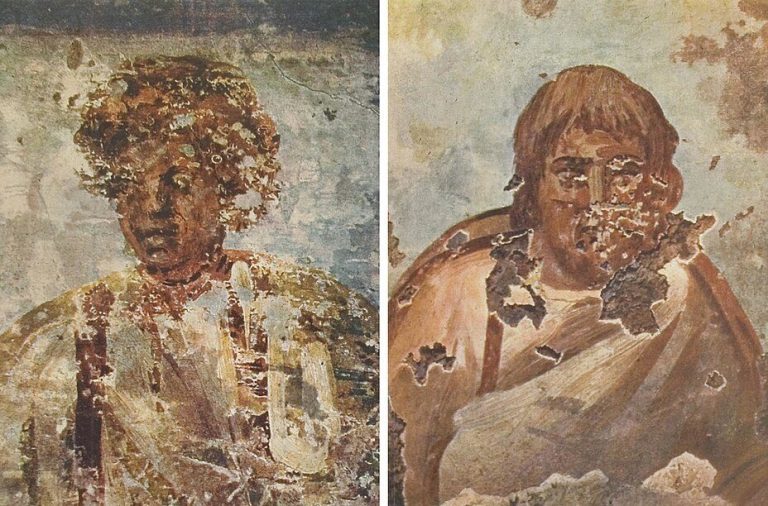
Roman catacombs
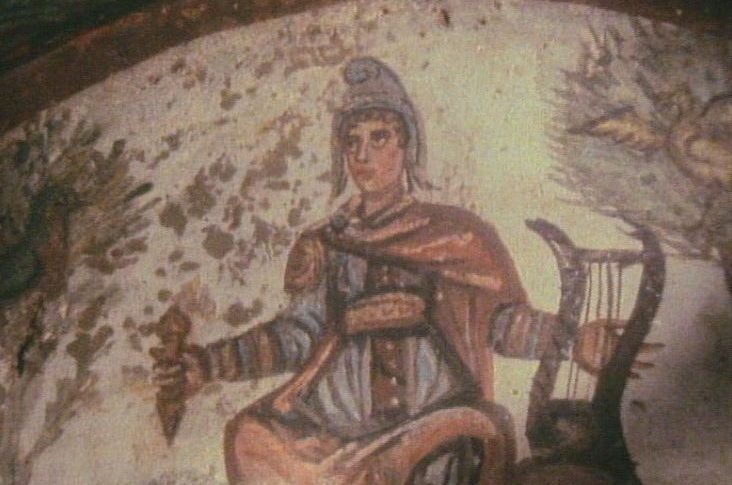
Jesus as Orpheus
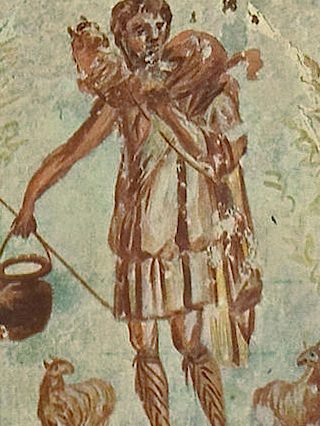
Jesus as the Good Shepherd
In the Roman catacombs (2nd–3rd century), early depictions of Jesus appear more symbolic and rarely follow a fixed portrait.
Only after the Constantinian turn (from the 4th century onward) – with the end of Christian persecution – did more central, frontal depictions of Christ begin to emerge, resembling the well-known Christ images.
From that point on, a surprisingly uniform image type developed.
This raises a decisive question: Where did this “prototype” of Christ originate?
The Mandylion of Edessa
A central key concept is the Mandylion of Edessa, also known as the Image of Edessa.
According to the church historian Eusebius (4th century), King Abgar V of Edessa (modern-day Şanlıurfa in Turkey) wrote to Jesus and asked him for healing. Later sources – especially the Doctrine of Addai – report that an image of Jesus was brought to Edessa.
In later tradition, this image is described not as a painting, but as a miraculously formed image of the face of Jesus.
This gave rise to the Greek term:
Acheiropoieton – Meaning and Origin
An acheiropoieton refers to an image that was not painted, but came into being in a supernatural way.
A sermon from the year 944 – delivered on the occasion of the transfer of the cloth to Constantinople – describes the image not as an ordinary painting, but as being formed by the “sweat of the face” of Jesus. This can be seen as a rough description of the characteristics of the image on the Shroud of Turin.
The cloth is daid to have:
- reached Edessa in the 1st century
- been hidden within the city wall
- been rediscovered in the year 525
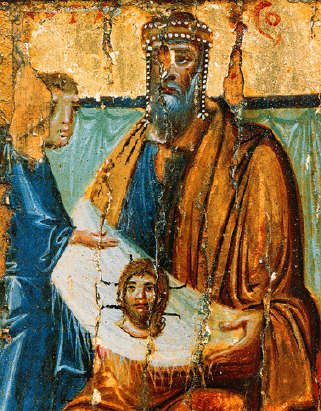
Presentation of the Image to King Abgar, 10th century
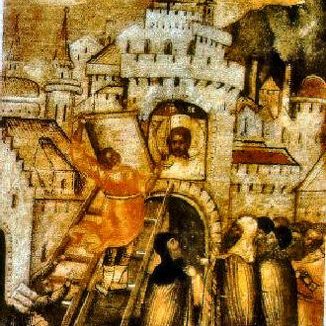
Rediscovery of the Mandylion, Painting, 12th century
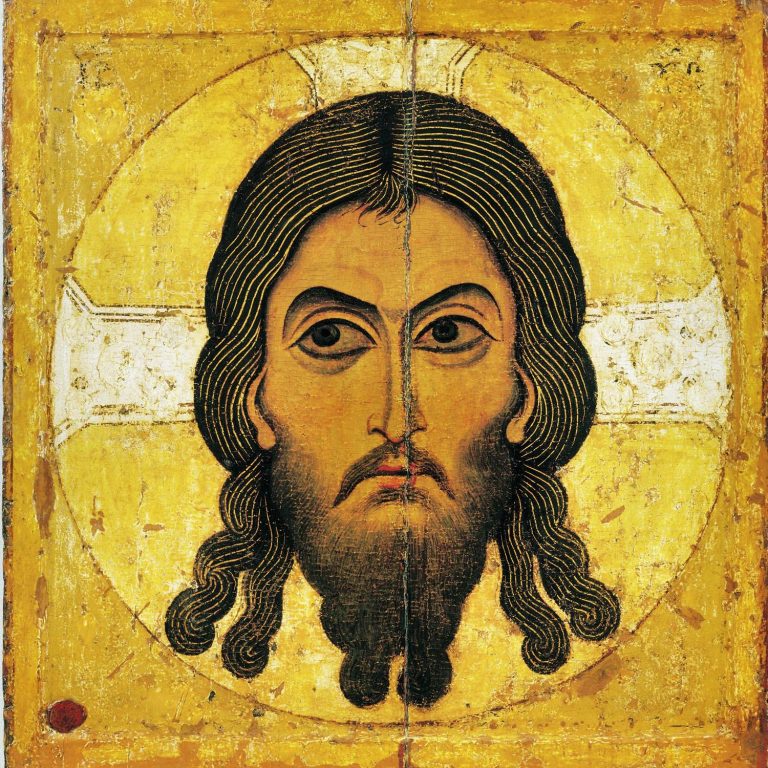
Typical Mandylion, Novgorod, 12th century
After 525, a clear standardization of Christ’s image can be observed in the Eastern Church:
- strong frontal symmetry
- long hair and full beard
- characteristic facial proportions
The Mandylion is considered the earliest known model for this iconography – not as an artistic interpretation, but as a reference image.
This standardization can be seen particularly clearly in the mosaics of Ravenna
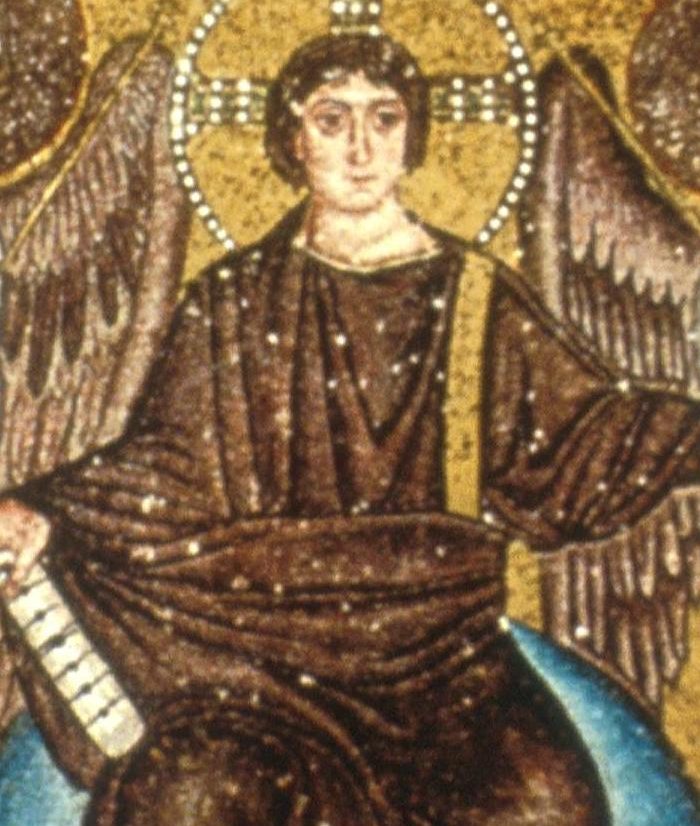
Ravenna: Jesus before 525
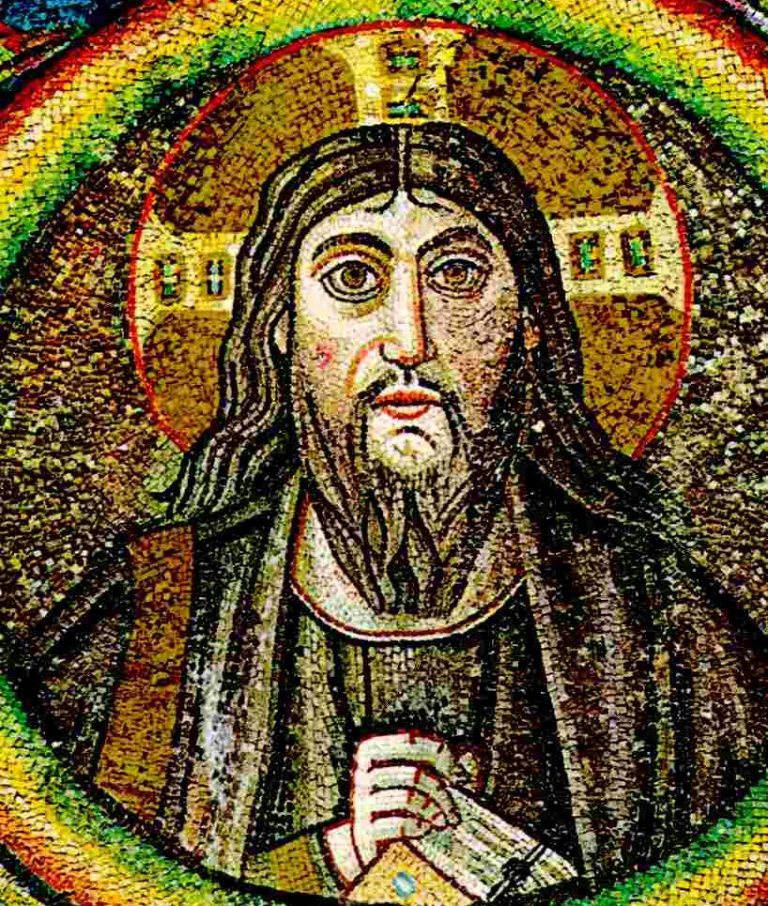
Ravenna: Christ after 544
The Transfer of the Mandylion to Constantinople (944)
After the Muslims had taken Edessa, the Mandylion was brought to Constantinople.
It was kept folded within a frame in such a way that only the face was visible.
When it was removed from the frame upon arrival, it was found to be a long cloth, folded multiple times, bearing the complete image of a crucified man.
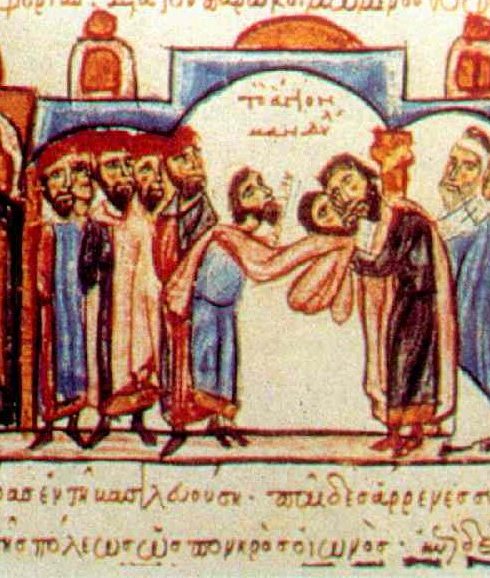
Arrival of the cloth in Constantinople – medieval manuscript (12th century)
In 1204 – during the Fourth Crusade – Constantinople was plundered by crusaders, and the cloth disappeared. It reappears roughly 150 years later in Lirey (France) – exactly at the point when the Shroud of Turin enters documented history.
Could it be that the cloth from Edessa and the Shroud of Turin are identical?
Between the standardized Byzantine image of Christ and the image on the Shroud of Turin, striking similarities can be observed:
- long hair with a central parting
- symmetrical facial features
- full beard
- distinctive proportions
Further indications are also discussed:
The Gero-Crucifix in Cologne (late 10th century) – the cross is demonstrably older than the cathedral itself. Notably, the unusual positioning of the thumbs corresponds to the image on the Shroud.
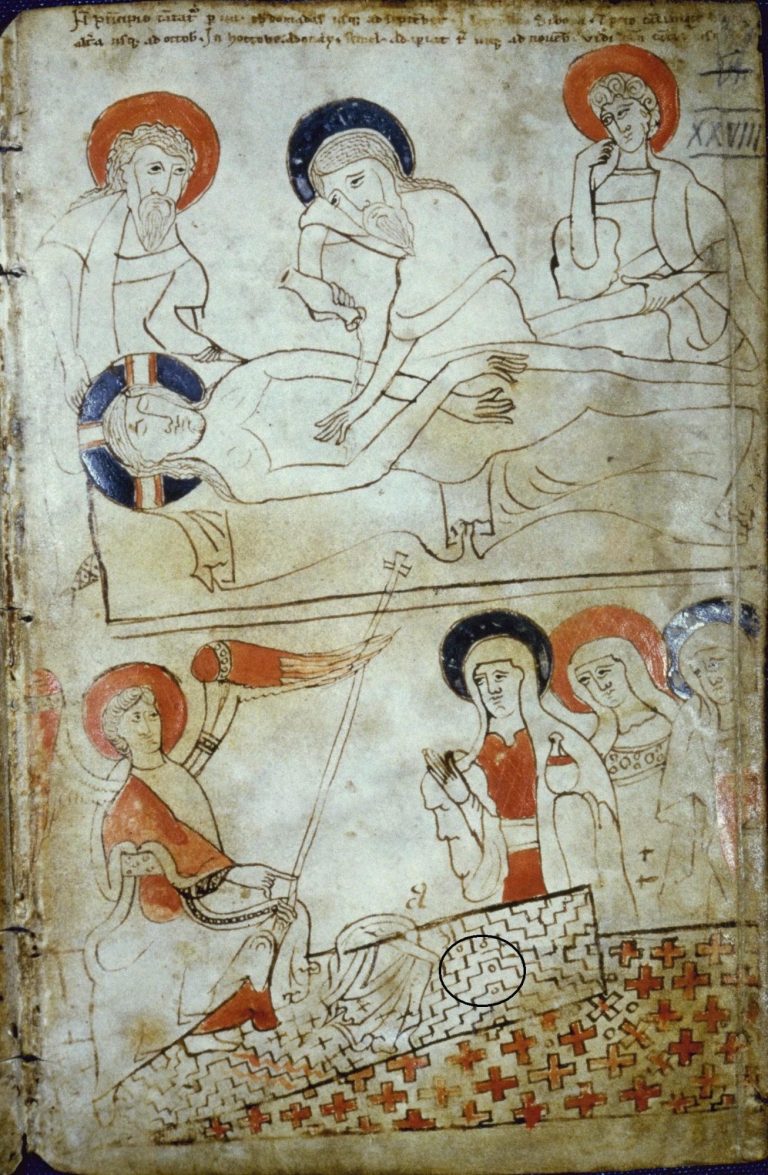
Codex Pray (c) STERA
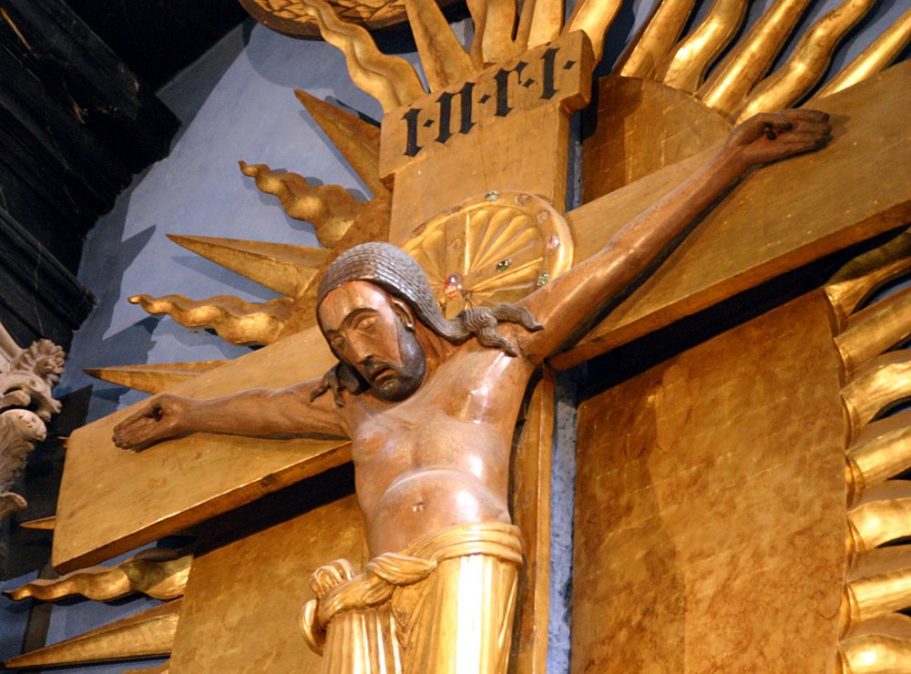
Gero Crucifix in Cologne
The Pray Codex (12th century) was created after a Hungarian delegation traveled to Constantinople and depicts the burial of Christ with a burial cloth. On it, four small circles are arranged in an L-shape. On the Shroud of Turin, four old burn marks can be found in the same location, arranged in exactly the same way. The body is depicted completely naked (unusual), and the thumbs are also not visible.
If it should indeed turn out that the image of the Shroud shaped depictions of Jesus over many centuries, this would be more than an art-historical curiosity. It would suggest that this cloth may have influenced Christian tradition far more deeply than previously assumed.
If these similarities are not coincidental, they point to a continuous transmission of a specific image tradition across centuries. It is therefore conceivable that the Shroud itself – or an image derived from it – shaped Christian iconography long before it entered documented Western history.
But this line of thought leads to a far more fundamental question:
What would it mean for our faith – and for our understanding of Christian history – if the traces on the Shroud point not to a dead body, but to a living one?
At that point, the discussion is no longer about art, tradition, or even isolated scientific findings.
It becomes part of a broader pattern – one that may require a shift in how we understand reality itself.
Continue with
Theological and philosophical conclusions → The Fourth Wake-Up Call