Radiocarbon Dating of the Shroud of Turin – the Seemingly Decisive Objection
Skeptics of the Shroud of Turin rely primarily on a single argument: the radiocarbon dating of 1988.
At the time, its result was presented with considerable media attention and was quickly regarded as scientifically established. To this day, the dating – “medieval” – is widely considered by the public to be the decisive proof against the authenticity of the cloth.
However, the project did not settle the debate. On the contrary, the dating acted as a catalyst.
Researchers who were neutral or sympathetic to the question of authenticity intensified their investigations. Numerous analyses and discoveries from a wide range of disciplines followed.
At the same time, investigative authors began to critically examine the C14 project itself.
During the radiocarbon dating of the Shroud of Turin in 1988, tree control samples of known age were analyzed alongside the main sample in order to verify the accuracy of the measurements.
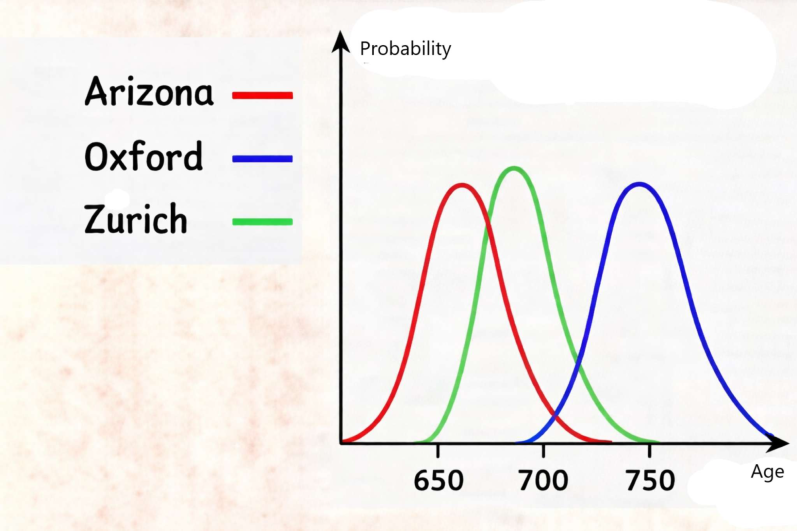
The measurements were carried out in parallel in three laboratories: Arizona, Zurich, and Oxford.
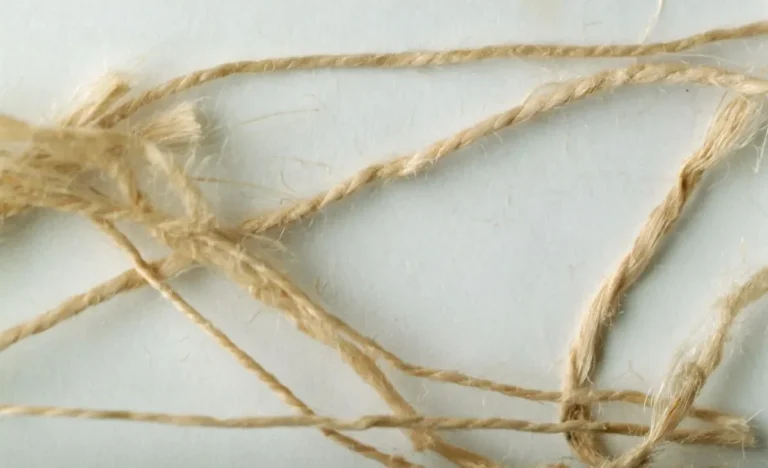
Shroud Sample
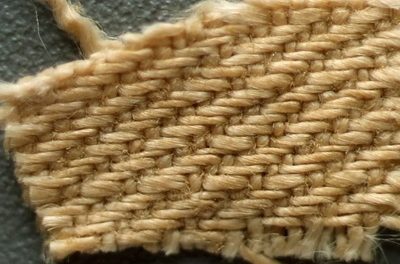
Unused piece of the shroud sample
Control Samples
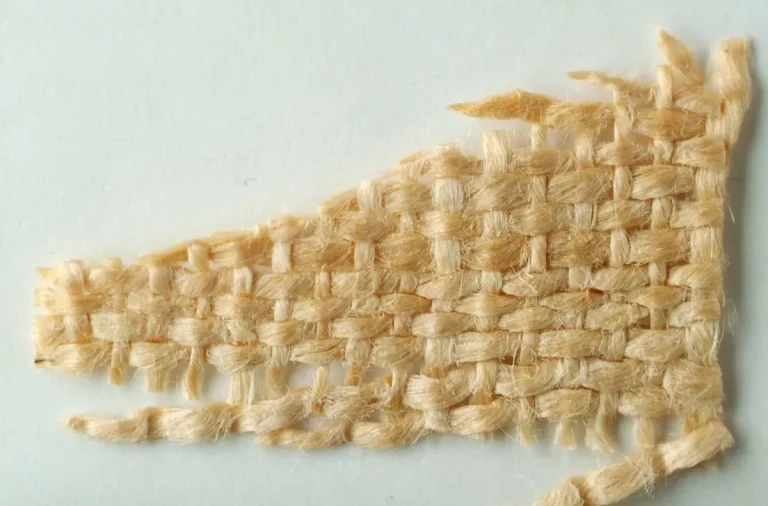
Sample 2: Egyptian Mummy (2nd Century AD) .
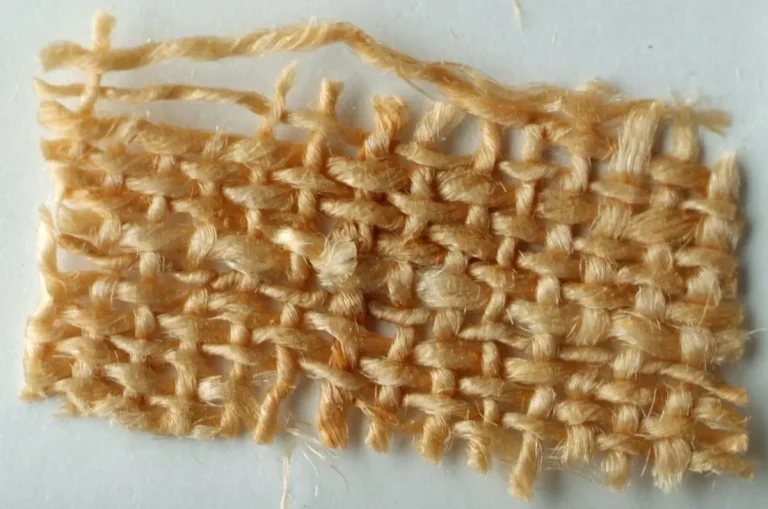
Sample 3: Nubian Burial (11th Century).
Sample 4: Cope of Saint Louis (14th Century)
There were problems with the measurements that raise important questions.
The results obtained from the different Shroud samples deviated from each other more than would be expected according to standard scientific criteria.
Under such circumstances, the results should not have been published. The cause of these discrepancies should have been investigated. It may even have been necessary to repeat the entire procedure.
Break in the Chain of Custody
The process of sample collection in Turin – carried out without external observers – was criticized as lacking transparency.
The subsequent packaging of the samples took place without witnesses in a separate room. The stated reason was that the laboratories should not know which samples came from which source.
However, due to differences in the weave, the Shroud sample could be identified immediately.
The accusation: the chain of custody was interrupted without any objective justification.
Speculation about data manipulation – were the systems hacked?
In addition to the methodological and organizational shortcomings already mentioned, there is another highly controversial view: it is not the samples that have been manipulated, but the dating devices themselves.
Specifically, it is suspected that the three identical AMS systems may have been tampered with in the laboratories: C14 - have the systems been hacked?
These are only a few examples. The list of contradictions and unresolved questions surrounding the project is extensive.
The conclusion remains:
The Shroud of Turin is not a refuted case. On the contrary, the case remains open – more than ever. Both science and the Church still owe it an investigation worthy of its significance.
However, there is a second reason why the result is problematic:
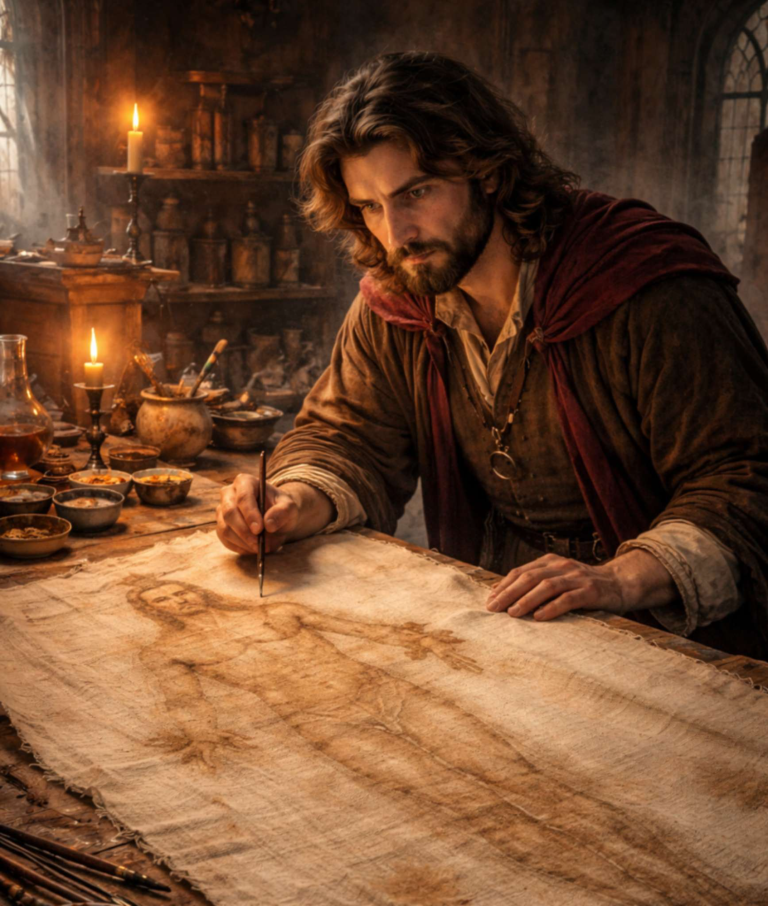
If the Shroud of Turin were a medieval forgery, one must inevitably ask: who would have been capable of creating it?
Such a forger would have required abilities that, even by today’s standards, would be extraordinary – if not impossible.
The Forger of the Shroud Would Have Had to Be More Than a Medieval Universal Genius
Historical Precision
The depiction of the crucifixion corresponds in key aspects to what modern research has reconstructed about Roman executions.
The nails are located in the wrist area – not in the palms, as was common in medieval iconography. The palms would not have supported the weight of the body.
The blood flows follow the physical laws of gravity. Different flow directions indicate changes in body position.
Even the side wound is depicted in a way that makes the described “blood and water” phenomenon anatomically plausible.
A medieval artist would therefore not only have needed to represent theological motifs, but also to understand and accurately depict forensic relationships that were only systematically studied in modern pathology.
Several forensic pathologists have examined the Shroud and pointed out that the injuries are consistent with a real crucifixion.
No clearly anatomically incorrect detail has been identified.
This raises an obvious question:
Could a person of the 14th century really have deceived modern forensic experts for centuries – specialists whose task is precisely to detect deception?
Medical Details
The traces indicate severe trauma, massive blood loss, possible signs of hypovolemic shock, and fluid accumulation in the chest cavity.
These findings were only described in detail in modern medicine.
A forger would therefore have required not only artistic skill, but also detailed medical knowledge far ahead of his time.
The Mystery of the Image
The real problem for the forgery hypothesis, however, lies in the image itself: The image is not a painting. No conventional pigment layers can be found, no binding media, and no visible brushstrokes.
The discoloration affects only the outermost fibers of the linen threads – microscopically thin.
The image is monochromatic, without directional strokes, and without any obvious artistic technique.
In addition, it behaves like a photographic negative. This became evident only in 1898, when Secondo Pia photographed the Shroud. The glass plate negative revealed a surprisingly lifelike positive image.
Did a forger in the 14th century deliberately create a negative – six centuries before the invention of photography?
Furthermore, the image contains three-dimensional information.
In the 1970s, analysis with the VP-8 image analyzer demonstrated that a consistent 3D structure can be derived from the intensity values – an effect that does not occur in ordinary paintings.
Textile and Material Aspects
The linen exhibits a 3:1 herringbone twill weave – a technically sophisticated form of weaving.
Pollen traces from the Middle East have also been reported, as well as particles associated with limestone from the region around Jerusalem. While individual findings remain controversial, taken together they form a remarkably complex overall picture.
The first historically documented mention of the Shroud dates to the mid-14th century. It was later transferred to Turin, where it is still kept today in the Cathedral of Saint John the Baptist.
From that point onward, its history is well documented.
However, historical indications point to a burial cloth of Jesus whose history may reach back to the first century – a cloth bearing an image “not made by human hands,” which disappeared during the sack of Constantinople, approximately 150 years before the Shroud reappeared in France.
The Problem of Nudity
The image shows a completely naked, scourged man.
In medieval art, however, Christ is invariably depicted wearing at least a loincloth.
Historically, there is strong evidence that those condemned in antiquity were scourged and crucified naked – as a maximum form of humiliation and deterrence.
The continuous scourge marks visible on the image – including on the buttocks – clearly indicate that the man was scourged while naked.
Why would a forger in the 14th century choose a depiction that directly contradicted his own religious artistic tradition?
Details of the Scouging
The injuries correspond to the pattern of a Roman flagrum – a multi-stranded scourging instrument with weighted ends.
The arrangement of the wounds suggests that two executioners struck the victim from behind.
A forger would therefore not only have had to reconstruct the instrument correctly, but also to depict the dynamics of a real execution in anatomically consistent detail.
And for what purpose?
In the Middle Ages, a few bone fragments and a convincing story were often sufficient to establish a relic that attracted large numbers of pilgrims.
Such a complex and scientifically sophisticated object would not have been necessary.
One can, of course, believe in a medieval forgery.
But this assumption requires the existence of a person who was simultaneously an artist, physician, physicist, chemist, and forensic expert – centuries before these disciplines emerged in their modern form.
The question, therefore, is not whether a forgery is theoretically possible.
The real question is: is it the most plausible explanation?
Yet even if a medieval forgery appears unlikely, one decisive question remains:
What do the direct scientific investigations of the Shroud itself actually show?
This question was addressed in 1978 by an international team of researchers as part of the STURP project.
The implications of these findings are explored in depth in STURP.
Continue with → STURP Investigation